Sunday, October 01, 2006

My Dream Nonprofit: Low Cost Custom IT, Wizkids, and Microenterprise

I've been dreaming of starting my own nonprofit. I mean, I like the freelance web design stuff I've been doing, but I just feel so darned fulfilled (slash jazzed, elated, stoked) every time I have a one-on-one session with one of my entrepreneur clients at the nonprofit PACE. Nothing in my workweek makes me happier. This must be my life's work.

So, here's the plan. Every single person who walks through the door at PACE and JobStarts needs better software for their business. They need a simple database that they can cold call from. They need a tool to design, price, and present floral designs to brides-to-be and high-end hotels. They need an automated, paperless system for buying, upgrading, and selling used cars. They need to keep track of twenty real estate opportunities in a busy brokerage office. They need custom software.

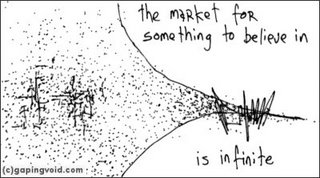
The market for good software is infinite. Every small business could run better if they never had to touch the kludgy, unintegrated wreck that is Microsoft Office. Copy-and-paste, "where's that file on the network," and "why can't I layout text and spreadsheets for my proposals in one simple document?" -- this is the tortured existence of every small business around the globe.

I want my clients to run their entire business from a web browser. I want an interface where data about clients and data about products isn't scattered across twenty files. (It should all just be in the database!) I want software designed to mimic an actual business process, not processes molded to sucky software.

Building this will be hard, but not impossible. With cool tools like Ruby on Rails and Flex, my genius Brazilian development partners, and the manic flood of software architecture gushing out of my brain, we can build anything!

The other ingredient should be kids who want to build stuff. Kids who don't think of computers as immutable consumption products -- glorified televisions for typing out long-winded blog posts and watching YouTube -- but kids who have a feeling that computers are meant to be molded, fiddled with, hacked, and changed, but aren't quite sure how.

Geeks who want to give back will teach the kids how to build cool stuff with Photoshop and Illustrator, XHTML and CSS, databases, and Flex and Ruby on Rails. They'll build some toys for fun, but also what our small business clients need. It will be an after-school program, or maybe a whole charter school. It will be hella fun.

I'm envisioning some sort of hybrid between Npower, Y Combinator and BUILD:
  • Npower is a nonprofit that helps other nonprofits apply technology to serve their clients better. They build custom software, help people plan what they need (including a neat little web app called TechAtlas), and provide training.
  • BUILD teaches underserved kids how to start their own businesses. The result? Kids do better in school, go to college in higher numbers, and hopefully make a few bucks in the process. They become confident leaders and discover their potential to do anything.
  • Y Combinator is a venture firm that gives seed money to smart young people who want to build the next Flickr, YouTube, or Basecamp. They're part VC and part incubator, meaning they help the companies through their first year, as coaches and advisors who've been there. They fund startups in batches, as many as twelve at a time, summers in Cambridge, MA and winters in Mountain View, CA. Everyone has to move there for a few months and hack together. They've launched quite a few nifty products.
Almost every custom software product we build can become a subscription product. There's lots of used car dealers, floral designers, and real estate brokers. Build it once, start selling subscriptions, and keep making the products better. Subscription fees will help subsidize our education activities. It's a social enterprise model that could end up serving young wannabe web geeks everywhere.

Designing and building software should be something everyone does, not just computer scientists. Something doctors and lawyers do, something social workers and teachers do, and most definitely something kids should do. John Maeda wrote about just this topic a while back:
As computer science enrollment goes down worldwide, I am hopeful that there will be an increasing number of students from the liberal arts and non-technology minded fields that take on software development efforts wholeheartedly. Creating software systems that can not only think, but also have a conscience, shall be a critical factor as we move forward in this odd century of extreme proximity and ever-present distance.
The world can seem pretty dark these days. But like computers, reality can be changed. Alan Kay, one of the finest humanist technologists is famous for saying: "The best way to predict the future is to invent it." My hope is that we can replace today's hopeless apocalypticism of failing schools, corrupt governments, and endless war with the hard work of building a whole alternative society right next to the old one. At first a trickle, but then droves, can then just walk away, hand-in-hand.

Saturday, September 16, 2006

Simple Web Tools for the Small Business

There's nothing like watching someone's eyes light up when you crack some of the problems that have been holding back their business. I've been volunteering for a while at a microenterprise organization called JobStarts, where I pontificate on the power of cold calling, a solid database of contacts, and systematic, well-designed marketing campaigns. My clients are existing or aspiring entrepreneurs in the businesses of child care, construction, event security, catering, and chakra-aligning panties.

I'm supposed to be doing what they call "technical assistance" but I call it coaching, mentoring, and just plain fun. I get to sit down and take an objective and caring look at how people can take their business to the next level. Sometimes it's a money constraint -- like not enough working capital to build up inventory and fulfill orders -- but most of the time it's a shortage of the right kind of marketing. And with my background in commercial real estate, my solution is almost always: GET ON THE PHONE AND START CALLING!

More about that in a forthcoming post, in the meantime, here's some essential web tools for the new entrepreneur:
  1. Take out some ads on Craigslist -- Write a quick explanation of what you do and how someone will benefit. Write a snappy headline. Include a great photo. Get an account to make reposting the ad simple.
  2. Get a website. The simplest way to an online presence is with the software I use for this site, Blogger. You can write passionate posts about how your business changes your customers' lives for the better. You are passionate about your business right? If not, do something else. You can also post great photos of what you do (cakes, panties, parties, whatever). A few fabulous photos are better than lots of okay ones. Choose carefully.
  3. Get a database. You can use a free one here. You should also check out DabbleDB or Basecamp. They're the coolest little Web 2.0 thingamajigs out there. They're cheap and worth it.
It can be hard to get started on the web. Using these few simple tools, I think it will be a little easier for you.

Thursday, January 05, 2006

Readers want to Learn

It pays to give away all your secrets. Your clients want to know how to do everything you do, and they'll pay you to teach them. Don't worry, you're not giving away the recipe for Coca-Cola or the plans for a nuclear reactor. I'm talking about the little tips for making better investments, writing better code, or closing a tough sale.

The always brilliant Kathy Sierra hopes for more teaching blogs for learning the little secrets in 2006:
The more we help our users learn--through any means (formal training, better docs, a product that encourages discovery and deeper engagement, an experience that seduces the user into wanting to practice)--the more time they can spend in flow. And ultimately, the more likely it is that they will become passionate about whatever it is they're doing.
.....
I hope to see more teaching blogs (or websites, etc.) rather than comb blogs used solely for announcements. One of my favorite examples of this new kind of 'learning blog' is the new one from my horse coach/whisperer, cowboy Darren Wetherill. (Side note, Darren's Horse Bliss blog was mentioned by Hugh of Gaping Void, and the next thing you know, Horse Bliss was mentioned by Businessweek online as an example of what a business blog could be.
Readers enjoy discovery, give it to them. The more they learn from you, the more credibility, respect, and trust you build online. If you concentrate on posting all the secrets of your business (little by little now, you've gotta drag it out), you will build a reputation as an expert in the field. Even with all your secrets in hand, people will now there's more in that head of yours, and that nobody does it like you do. At the end of the day, most will realize you're better at this stuff than they are, and you'll get paid.

Wednesday, December 28, 2005

How to solve the drafts problem

My Blogger dashboard has way too many half-baked posts in languishing in the wretched purgatory of "Drafts." I come back to them at times and they never seem to work. I despise them. I get angry at myself for writing them in the first place. Who are these bastard children? These broken ideas, these run-on sentences, these fancy phrases that go nowhere? Do I really write this drivel? Well, yes. Please accept it. The past happened and no amount of present day contempt will solve it.

There is one good thing about these drafts. They remind me that I have not mastered writing as a process, as something to be worked on, labored over, massaged and tweaked and cajoled. They are opportunities to practice acceptance of imperfection, knowing that it can only get better, even if it has to get worse for a short time on the way.

It's funny what this blog has become. Originally, a lofty place for the hottest ideas floating around in my head, it's become more of a notebook of good advice to myself. It's a place to store those rare moments of clarity, the tiny breakthroughs, the small beam of light shining through a crack in the wall of my confusion. Those moments can pass unremembered and unreflected, as so many things in my life seem to do. Or it can be recorded and cherished for days when I need refuge from a dark mood.

Today's lesson is one I must learn over and over, the problem of overthinking. So many things are left trapped in my head, unspoken for fear of not saying the right thing, unwritten for fear of never finishing. So much fear in overthinking. So much denial of reality. Such a stingy hand of thought that will not release the small sparrows of conversation, the bounding rabbits of a fresh paragraph.

Step One in my writing process must be release, must be opening. I'm so good at closing, boxing, defining, that I don't let things escape to take on their own lives. Living such a caged existence, my thoughts sit in their own excrement, breathe in the gases of their own waste and decay. Given some fresh air, allowed to escape into the wild, the thoughts might go on living for a long time, or might be killed by fitter thoughts. But at least there would be a fossil record, a pile of bones, some tracks in the wilderness. Those fragments can be shaped. They can be made new.

Step Two must be a search for essence. "Omit needless words," say Strunk & White. "Om," says the void. Things to put in, things to take out. But it must get thinner first.

Friday, December 16, 2005

Web Grows Faster than Brain

Fresh off spearheading the redesign of my company's website, I'm looking to do the same for another agent in our office. The same only bigger. Much bigger.

So I'm trying to write him an email right now cataloguing some of the cool stuff going on with the web right now like the hottest designers, technologies, etc. -- and I can't access memories of the stuff fast enough. I should be writing posts as I go and just send him links to all of them. Collectively, they'd be my entire manifesto for a visionary new real estate site.

Instead, I've been surfing too much and recording too little. There's no cookie crumb trail through my vast ramblings through the web. The web moves faster than my brain. The only way I can keep up is to blog more.

I know I keep writing posts like this. "Blog more," I say to myself. Write shorter posts, with less editing, less self-censorship. More volume, less perfection. Here's to trying again.

Saturday, September 10, 2005

The Five Mile Per Hour Lifestyle

I threw my hands in the air, saluting the morning sun. A giant sunflower rose on the end of a cherry picker's boom. Jack Johnson played quietly, the people listened in peace. It was incredibly slow, unrushed, the other side of the planet from hurried. Just another sunrise over the salt flats of Black Rock City, Nevada -- the crescent moon city that is Burning Man.

This experiment in "radical self-reliance" immerses you in the most extreme conditions of beating sun and blowing sand, testing your patience and growing your humility. Money does not exist. The only things sold are coffee and ice, both as public health measures. You gotta have cold beers for the thirsty and medication for the caffeine addicts after all.

When everything's free, the richest are those who give the most. My first day out I needed a vital part for my bike, and found someone who had exactly what I needed -- all ready to go. We traded stories along the way and had a delicious breakfast of hot-off-the-griddle pancakes. We hit the spot and he gives it with pleasure. I ask, he answers. It's all just common courtesy on the playa.

You spend your days in this sort of social trade. Schmoozing with the pilots at the airport to get a fly above the city. There are no commercials or price tags to tell you how to act, just the spirit of compliment barter, the haggling of the taller tale. When everything's free, the richest are those who give the most.

Ceremony and ritual here are not bound by the holy books of yesterday. Find the artist-prophet-genius within you. I promise it's there in everyone, dying to crack out to invent ceremony continuously, to make the space around you sacred through an approach of respect.

When everything's free you spend an afternoon building a Mayan pyramid out of adobe bricks. Bricks you formed yourself from water and sifted dust. Another apprentice teaches you how to knead clay out of this crusty piece of earth, how to run a wire through the block to form sheets of clay that will be knifed into bricks with a ruler.

The alchemical solvent that makes this all possible is water, a precious fount of life in the desert. The stuff that keeps us from drying out to raisins -- Keep the pee clear and copious, kids! -- the stuff that glues dirt together so you can build with it. We should be careful with our earth's limited water, we don't want the whole planet to turn to desert, trust me.

You learn to trust yourself and your friends. You cement your most special relationships with love refined in the fire of the desert. You go to sleep utterly and blissfully exhausted every night, voice ragged from a long night of tribal storytelling, nodding heads, and smiling mouths. You spend a week devouring the world at a very slow pace.

Tuesday, June 07, 2005

Hundred Mile an Hour Lifestyle

Photo_043005_019
Breezing over oceans of image memes -- ima-memes
Hipster couture
.
Rand Viking the Norse God. The cold inner fire of exploration.
The Nike symbol you've got plastered over your mindxperience.
The Totem OverAll.
Look at the major path through a city of Beverly Hills and West Hollywood and see what you see -- People Buzzing.

Thursday, June 02, 2005

ADD/ADHD and Neuroliberty

Millions of kids across the country are being medicated out of their excitement, tranquilized for their energy, and denied the right to wear themselves out naturally by bouncing and playing. I'm talking about the increasing number of children being diagnosed with Attention-Deficit/Hyperactivity Disorder (ADD/ADHD), a pathology originally invented for children who have a hard time sitting still in class, but which is now being applied to adults too. Our society's habit of medicalizing everything and looking for magic pills to fix all our ills has made this vaguely defined "disease" a huge industry.

The drug companies have already saturated our schools so now they're after adults who have problems with procrastination, "wrapping up the final details of a project," or "remembering appointments or obligations." Doesn't that sound like, um, just about everybody? These quotes come from a simple self-diagnosis screener on a site called Adult ADD. What is it? built by the maker of an ADD drug called Strattera. The site is the first sponsored link to pop up when you type "ADD" or "ADHD" into Google. Looks like there's finally a solution for to my infrequent blogging!

The real attention deficit is the lack of attention from dysfunctional parents and schools. Kids need to run themselves ragged on soccer fields with mom or dad, not sit in front of PlayStation all day everyday. Schools need to stop cutting PhysEd, music, and dance programs where kids can use their bodies and start firing the vampire paper-shuffling educrats instead. Everyone needs to stop stigmatizing kids by telling them self-fulfilling prophecies about their inability to concentrate. We lower expecations by diagnosing them with a nonexistent disease.
_______________
Further thought branches:

AbleChild: Parents for Label and Drug Free Education consists of a growing number of parents outraged over both the subjective labeling (ADHD, ADD, OCD, ODD) and pervasive drugging of our children.

An interview with Wrye Sententia (cool nom de plume for brain freedom activism huh?) from The Center for Cognitive Liberty & Ethics:
I read that Ritalin is the most popular drug on college campuses today as adult students are finding it an excellent study aid. [See "Academic Doping"] I’m not sure what this says about how society will cope with new generations of overachievers rather than more legendary generations of slackers, but maybe it’s for the best — at least it is for the GDP....this is what stimulant drugs for children are aimed at, what I like to call cubicle consciousness. I was just talking today with a neighbor who’s 12 year-old son has trouble concentrating in school and is being called a "borderline case" — which in his case, means that because his parents refuse to place him on prescription stimulants, he is repeatedly tested for learning disabilities and alternately scores "genius potential" and "diagnosed ADHD". Surprise, surprise! Either the diagnostic test or the school system is failing him. [Emphasis mine]
Thomas Szasz (author of The Myth of Mental Illness) reminds us that "psychiatrists have always used diagnostic terms to stigmatize and control people -- for example:
* black slaves who ran away to freedom suffered from drapetomania;
* women who rebelled against being controlled by men suffered from hysteria;
* until only a few years ago, men and women who engaged in sexual acts with members of their own sex suffered from the dread disease of homosexuality.

Wednesday, April 13, 2005

Kundalini Hollywood

Photo_011505_001
Kundalini yoga is Kinetic yoga. Forget gentle flow, it's more like force and quick-panting- fire-breath. Seemed like a kind of calisthenics -- lots of arm cirlces and reaches in a rapid tempo. All the quick breathing warms the body. Repetition brings agony, but forget that and concentrate on moving. "Don't worry, your arms won't fall off," says the youth yogi, and they don't.

Throwing your arms around generates serious leverage and tons of momentum. Muscles have to stabilize and resist that. Clench up the abs and the sex, and get one powerful core. You shouldn't step under a wreckingball of hands thrown from above the head. But you should do it to rip the shoulders and back.

Definitely new things learned to add to my own practic. Collect the stuff that works and put it to work.

Sunday, April 03, 2005

Open Mike Night: The New(Old) Church

Photo_011505_006

They passed around a plate at the poetry reading tonight. If the words rose to prophecy, if the laughs shook your soul, if the images blasted the scales off your jaded eyes, please put in a $5 bill, not a crumpled $1.

This must be how religions begin. Talented words spawn an urge to creative action in the pilgrims. The words give faith that even if one's own Work In Progress never reaches Masterpiece, the process will purify and uplift us.

The action required of us today is to push our stories back upstream, up towards the media gods of Mt. Hollywood. Pick up your keyboard and camera because their divinity is ours.

Think Haiku

I need to let myself write short posts. Prune the tree of infinite possibilties, unplug my brain's multiplicity module, and think more haiku.

Wednesday, January 05, 2005

The Present-Future is Hypercompetitive

I hate monopolists. I despise them with every ounce of my being. I want nothing more than the complete freedom of every human person on earth. But when I talk about my laissez-faire tendencies I'm immediately met with one argument from my lefty anti-capitalist friends. Markets tend towards nasty monopolies that exploit the poor and brutalize the poor worker-consumer.

The government's job is to flick those robber baron cappies off their peak perches of power. Me ontheotherhand think enterprenurial competitors are happy to do that anyway. Google and Linux seem perfectly able to gobble Microsoft's market share. The same with Amazon and Wal-Mart. People are afraid to look the future in the eye for what it is: hypercompetitive.

Wednesday, December 29, 2004

Why I Voted for the Stem Cell Initiative: Supersimple Ethics

Opponents of stem cell research would like the rest of us to believe that their objections to the burgeoning field are purely scientific. "Embryonic stem cells have not created a single useful human therapy," they protest. It looks like that tired excuse is on its last legs. A researcher at the Christopher Reeve Research Center at UC-Irvine has made paralyzed rats walk by injecting human stem cells into their crushed spinal cords. Human trials are expected in 2006. Considering researchers have only been working with these cells since 1998, I think this qualifies as excellent progress.

Obviously, the fight against the use of human stem cells is not about science, but rather about the issue of aborting early-stage human embryos, an issue of morals and ethics. A long discussion on this issue with my great uncle, a priest and monsignor in the Catholic Church, on Christmas has made me want to clarify my position on this issue a bit more. But first, a little background on personal experiences that have brought me to where I am.

In the spring of 2002, six members of my residential life team from USC were in a brutal car accident on the Santa Monica Freeway. Stalled in the fast lane behind a car out of gas, they were rearended at high speed. Injuries in the car ranged from bumps and minor fractures to punctured lungs and torn spleens. My good friend R. was paralyzed from the chest down. I spent an interminable, delirious, and nightmarish night in Cedars-Sinai Hospital watching one of the greatest givers of joy and sunshine in my life, a model of goodness and humor, lie motionless on an ER examining table. I watched heavy-handed neurologist prick her sides, checking for feeling. "Feel that? Feel that? Feel that?" "Ow!" Then he marked her with a sharpie. I cried in the waiting room.

When I voted for the California Stem Cell Initiative, I voted for my friend, R. I voted for therapies that might help her walk again. Maybe I left some potential people -- those embryos harvested for research -- out in the cold. Those little balls of cells don't enter into my moral calculus, though.

This was a case where I tried to use the supersimple basis of all ethics: the golden rule. I chose to use the "strong" version of the rule -- not "Treat others as you wish to be treated" but "Treat others as they wish to be treated." The corollary of the strong golden rule is that one should be able to trade places with the person affected by an action one takes. I couldn't trade places with R. if I had voted "No." I couldn't cut off a promising avenue of research because of our cultural hangups about abortion. I wouldn't want to trade places with her if my vote helped defeat an initiative that might cure her/my paralysis.

On the other hand, trading places with an undeveloped embryo is logically impossible. I have an independent mind-body embedded in an environment of friends and work and sights and sounds. An embryo has no sense organs, no mind, and no existence independent of its mother. It's basically an organ of the mother. I can't put myself in an embryo's shoes because it has no shoes.

We must pursue all types of stem cell research -- embryonic, adult, umbilical, etc. -- simultaneously. We must cure my friend R. and hundreds of thousands like her.

Sunday, December 19, 2004

Rocking the Education System

The way we organize and perform education in this country is broken. Generations of rules and habits have split knowledge up into little bits. We examine pebbles instead of rocky beach landscapes. Words on a page put real-lived-life into cozy genealogical compartments. Human touch is taxonomized into a dim gray cloud of abstractions.

Now when our teaching methods crush our natural learning instincts only a radical departure, a complete reorganization of the institutions can equip our young and old learners with the tools they need to remake the world and earn a living in a competitive world. And I think it can happen. My solution? Just walk away and let the dinosaurs die. Build up an alternative educational infrastructure and let the old wither away. Home schoolers are doing it and indie consultant-entrepreneurs too. It's time we let the kids go.

Smash the strangling grip of teachers unions. Give kids and their parents universal education vouchers and the right to choose so that schools join the modern innovation economy. Refocus on modern rhetoric: the business plan, the scientific paper, the flash animation, the google search, the cold call, and the op-ed. Chase goals and projects like figuring out how a car works by building one. Let students learn about cities by designing and gaining approvals for a mock real estate development.

In the movie School of Rock, a group of prep school kids joins a washed up slacker rock musician (the hilarious Jack Black) to put together a rock band. For four weeks that's all they do. Social studies is replaced with the complicated cultural history of rock music's development. Figures like Hendrix, Marley, and Johnny Ramone are recognized as the heroes they are in the modern epic struggles against colonial oppression, warmongering, and the rest of society's reactionary squares. After studying the complicated family tree of psychedelic rock to punk, the kids spend the rest of the day playing and writing music. Kids that can't sing or play an instrument get security detail or take over management and promotion duties. No one fails this class because it's impossible. Each child gets to play on their own strengths.

This is an integrated method of education where the bodily skills of singing and dancing and playing are not divorced from the intellectual requirements of understanding the flow of history or the logistical acumen of producing entertainment for consumption. This can work with any subject. Let's return to my mention of a mock real estate development for another example.

The class could design and develop an apartment building over shops or a public library with an attached skate park. They'd have to go through all the approvals, fill out the bureaucratic forms for building permits, and understand the importance of how contracts govern business relationships. Daily debates could examine how we should balance local ecology, wildlife habitat, and farmland with new homes, auto malls, and big box stores. Kids are natural dreamers that can help us develop integral visions of pomo-prosperity that harmonize human2human and human2earth interactions. With the NIMBY's locked in ugly battles with the evil black-suited real estate developers, I think kids can help break the logjam of how we can build human settlements -- i.e. we can drink 3 minute lattes and still have safe spawning grounds for salmon.

Kids are given schizophrenia by splitting the school work day indiscriminately -- 40 minutes here, half hour for lunch, and another 90 minutes there. Hustling them about in hallways, burdening them with piles of meaningless textbooks, we deprive them of the natural process of discovery. Big brained mammals like us learn automatically. We learn language and how to tie our shoes from imitation and adaptation without the slightest effort while subjects like mathematics come with fatal difficulties -- mostly because its teaching is utterly divorced from the natural-sensate world.

Project- and team-based education that concentrates on a single enterprise like a battle of the bands or a real estate development can help stop the unnecessary atomization of knowledge. Projects return the pleasures of craft and vocation to complex knowledge domains like entertainment and city building. The webworld prizes connections and integration, it's time our education system did the same.

------
Inspired by 21st Century College: An Outline, the ideas of Gregory and Mary Catherine Bateson, Buckminster Fuller, and many long conversations with Ket.

UPDATE: I thought this list of the top 1,000 things to know from marketing guru Seth Godin was pretty cool. We've got some good overlap.

Thursday, November 11, 2004

A Picture Stops a Thousand Lawsuits

Designing graphics to convey a complicated idea about the urban experience in real three-dimensional space is a non-trivial task. Information designers that can tell a simple story about how the built environment effects our lifestyles and moods. Not in my backyard has disabled us from making intelligent choices about the places we live and work. Public conversations have become split into absurd positions pitting imagined evil black suited real estate developers versus nature, mom and apple pie. They can only be resolved in endless lawsuits. Why not concentrate on building beautiful places?


The animation comes from City Comforts Blog, a site that examines the best solutions for living well in cities. How do you "read" this graphic? What does it say to you about the world? Look at the little person, surrounded by cars or framed between building or street. Where do you cars belong in our hierarchy of needs? Out front or in the back? Or should we eliminate cars altogether like my friend, Ket ("parking lots are stupid. silly humans.") might like?

There's no right answers to these questions. But the strength of the graphic is that it helps you start asking questions about how the new apartment building or Wal-Mart Supercenter will change your neighborhood. It offers a shared reference point to base rational public discussion and decisions on.

Now there's no denying numerous benefits to both layouts. The suburban design gives first dibs to people in cars and the urban one to people on foot. But both are about people. Cars are both peaceful individual enclaves and makers of aggression and separation. Driving is fast and convenient -- point-to-point, no transfers, no waiting, no walking. Indoor air conditioned place to air conditioned place, cars are comfortable and efficient ways to get around.

Walking gets our hearts pumping and slows things down so that our senses can gorge on falling cherry blossoms and the smell of coffee on a sunny sidewalk day. I think people want the sensual city of walking and the speed city of driving in its convenience and comfort. There are design solutions that can incorporate both.

Our cities are constantly remade. Hollywood yuppies disguised as starving artists displace the poor from gritty downtown industrial districts. Farmland and forests get gobbled up by sprawl. We can make choices about how that happens. Talking about the choices we have in our landscape in flux is made smarter and easier by graphics like David Sucher's. It allows us to sidestep confusion, obstructionism, and name calling so we can concentrate on building great collaborative cities.

Living Fearlessly

I'm not sure why I've been psyched out of blogging lately. Letting fear get in the way of the stories I want to tell I think. I've left the cacophony of opinions, observations, arguments, love and hate that make me up all swallowed up and snuffed out. Not lacking desire but choosing inaction. My lack of posting nags my mind. I think "I really should be writing" while I distract myself with reading and blogsurfing. I entertain myself watching thoughts dance and play and then flitter away like dead leaves in the wind. I suffocate myself with online information overload the way others do with television. Detached and passive as a sponge I float over life bemused, inspired without perspiring. Dabbling in puzzle and curiosity to avoid direction. I want to stop planning and start improvising. I want to let flow flow and stop overthinking and over-researching everything to death. Viva la spontaneous post.

Monday, October 25, 2004

Marijuana Activist Marc Emery Free, For Now


Marc Emery, a public example of the cruelty surrounding marijuana incarceration, is again free after a 61 day jail sentence for passing a joint (first discussed on this blog here). The video "Welcome Home Marc!" shows a leader energized by the sacrifice he made for the movement to stop the oppression of pot people in Canada. All the great freedom movements have required a charismatic leader to be jailed to energize the populace and bring the oppressors' cruel actions into public ridicule and outrage. Nelson Mandela spent 28 years behind bars to fight apartheid in South Africa, Gandhi pursued debilitating hunger strikes for Indian independence, and Marc Emery wrote inspiring blog entries (like here and here) condemning Ashcroft his henchman, the prison guard unions, and the corrupt cops and the drug lords they feed off, for what they are: evil.

That's right, the War on Some Drugs is completely, unequivocally evil, a human rights disaster, and a phenomenal waste of money. Conservatives like George "Axis of Evil" Bush and Ronald "Evil Empire" Reagan brought evil back into our politically correct public lexicon. So when I look at the destruction of families; the monopoly profits for terrorists and organized crime; the street wars that pit kids with AK-47's and RPG's against the police in destructive competitions of brutality; AIDS, cancer, and chronic pain patients imprisoned for using the only medicine that brings them relief, I can find no other word for it but evil, irredeemable, hideous, hypocritic evil.

War without end, without an exit strategy or hope for victory can bring nothing but tragedies like this one:
Quadriplegic man dies while jailed for pot possession
Jonathan Magbie, a 27-year old quadriplegic resident of Maryland, died in a Washington DC jail on September 24, after being sentenced to 10 days imprisonment for possession of marijuana.

The marijuana conviction was a first offence for Magbie, who was paralyzed from the neck down at age 4 after his school bus was hit by a drunk driver. Since then Magbie had been under almost constant nursing care, and got around on a chin-operated wheelchair. (A year after his injury, a young Magbie had met President Ronald Reagan during a White House ceremony commemorating National Respiratory Therapy Week.)

[Read the whole thing and don't forget the Washington Post articles.]
Can we not see this for the insanity it is? Are quadripalegics true threats to our safety or are they greater threats to the puritanical status quo? The War on Some Drugs is the lastest in a series of government efforts to eliminate minorities and freethinkers, to consolidate power and squelch dissent. There were the witch trials in Europe that destroyed centuries of herbal healing knowledge, the Nazi death camps for Jews, the concentration of Native Americans in reservations, and black slavery in service to the idle agro-aristocracy. All demonized peaceful, productive people in the service of wicked ideologies.

We must choose a model of public safety and health over the vindictive moralism of our current "punish the sinners" model. We must practice the same judicial forgiveness we extend to repeat alcohol abusers and drunk drivers to those who abuse marijuana, and leave the responsible consumers of the plant alone. Marc Emery is free, for now. He speaks for us. Let us speak for him, for freedom, and for peace.

Sunday, October 24, 2004

Spellbound by Learning


Grab hold of your education because no one will do it for you. That's the central message of the documentary Spellbound (trailer) that tracks eight young Americans from their homes in tough urban neighborhoods and beach houses to the National Spelling Bee. They make up the entire continuum of American culture -- one the daughter of illegal immigrants in South Texas, another from trailer park rural Missouri, another the daughter of elite parents in New Haven, Conn., the college home of both our presidential candidates, Yale. They vary in privilege but none lack a hunger for learning, competitive spirit or strong encouragement from parents and teachers.

Poring over word lists in a trance, the young spellers train maniacally, like elite brain athletes. One of the kids, Neal Kadakia, had the benefits of obsessively loving Indian parents and an elite education in posh San Clemente, CA. His father stressed meditation and concentration and rigorous training methods with computers and spelling coaches. Others made due with unabridged dictionaries, notebooks, and self-authored crossword puzzles. Whatever their resource levels, the kids had a passion to work at something and get better. They provide many lessons for the rest of the world's youth.

If you don't like spelling, race souped up Civics. Design t-shirts and mouse pads and sell them on Cafe Press. If you're bored, challenge yourself more. Write your own story every day and make it heroic because anyone can erect mind obstacles and cage their hopes, but only heroes can chill, take a deep breath, and go do it anyway. Don't give into those who want to crush your secret passions. Harness the energy you find in people or books or knitting and get some extra miles out of your brain. Feed your hungry desires. Seek out the support you need. Encourage the people around you because everyone needs a team of coaches. Reach out, strive, believe.

The spelling bee hopefuls face difficult challenges in learning all the many sides English, but they come out with a better understanding of how to operate in a complicated landscape. English routinely poaches other languages for useful words like umbrella and burrito and is thus an amazing entry to the world of overlap and borrowing that drive value in today's global economy. Foreign luxuries like coffee and tobacco used to evoke mystery and power the way brand names like Mercedes and Louis Vuitton do today. Science and medicine fill books with jargon based on Latin and Greek. English is a chaotic mishmash, a cosmopolitan city of global cultural interchange, today's lingua franca -- a language for all. The ones that learn to keep up with it in all its global expressions will have incredible advantages.

A little while back Dan Sherman asked, "What's your immigrant story?" How did you sacrifice to overcome adversity? How did you push yourself and those around you harder? What desert did you cross without enough water? Each Spellbound kid had her own story of immigration, ignoring teasing "cool kids" or the dangers of the ghetto to find peace in themselves and their unique abilities. You are your own worst enemy if you don't invest in yourself.

Wednesday, October 13, 2004

NeoJob: Art Enabler


Art Answers helps artists expand their repertoire from putting paint on a canvas to more complicated stuff like fire-blowing sculptures or complicated video projection schemes. Artists can concentrate on dreaming up new art, not geeky implementation details. With the growth of elaborate spectacles at opening ceremonies, Cirque du Soleil shows, and theme parks, art enablers and entertainment engineers that can meld technical knowledge with artistic vision wil be in high demand. And people wonder what's going to replace all the crappy code monkey jobs going to India. Do you want to be a Dilbert or a DaVinci?

Sunday, October 10, 2004

Taking My Dad's Consulting Business to the Next Level with a Blog

My dad took the plunge a year ago and started his own independent consulting business, called Building Commissioning. According to his site, commissioning is "The quality control component added to the design and construction process that ensures that new buildings operate the way that their owners intended." Basically, he debugs buildings. The unique proposition is that the design and building process works better when it's transparent, when the major players are held accountable for their decisions by an impartial third party. It's relatively new concept for the industry and therefore requires a lot of client education, which is why I think he could really benefit from starting a blog.

Gapingvoid
megablogger Hugh Macleod thinks the function of companies is to be "idea amplifiers." The best way to inject your voice into the market conversation is with a focused and insightful blog about how you add value to a client's assets.
Blogs are funny things. Say something smart, people pay attention. Say something dumb, you're ignored... Regular blogging can help train you to better discern between to discern between smart and dumb. Makes it easier to extend this to the rest of one's business.
Perfect! My dad is in the business of discerning dumb stuff in the design and construction of buildings. A blog allows him to tell the stories of how his clients save money when he roots out the numbskull shortcuts that design engineers and contractors use. And he has tons of stories to tell, he's been in the HVAC and district energy engineering field for years. Every job is a post. Every new story about commissioning's vital importance in green building is a post.

The best thing is, nobody else is doing it! (There's only a couple blogs that I could find that come close: ACCABuzz, HVAC Planet, and EnviroPundit.) He could become the expert blogger on the field, building reputation, trust, and visibility. Already some companies are requiring job applicants to be bloggers. Shouldn't we expect clients trying to hire a consultant to do the same? And this trend can only increase.

Other suggestions for building an online identity for his firm? Buy some AdWords. Think about revamping the website with dirt cheap services from international designers on Design Outpost or Elance (or go all out and hire the amazing Sekimori). Check out some of the sites that promote blogs for business use like The Big Blog Company, BusinessLogs, and Business Blog Consulting. Subscribe to these and other webfeeds using Bloglines. Create custom feeds with Yahoo News Search and Blogdigger for phrases that you'd like to write posts on like "green building."

I know that I love talking about my dad's business with him. I'm sure lots of potential clients would like to get in on the conversation.